The Psychology of Romance Scams: Understanding Victim Impact

Official link verified by High Caliber Portal
The Psychology Of Romance Scams: Understanding Victim Impact Information Center
Get comprehensive updates, key reports, and detailed insights compiled from verified editorial sources.
Background to The Psychology Of Romance Scams: Understanding Victim Impact

Romance scams don’t just steal money—they leave deep emotional scars. In this video, we sit down with, Dr. Jen Lawrence, the Lead Program Counselor of our Romance Scam Recovery Group, to explore the psychological toll of romance scams, why victims struggle to break free, and how emotional manipulation keeps them trapped. ❤️🩹 Topics we cover: ✔️ How scammers use psychology to build trust and control victims ✔️ The emotional aftermath and trauma victims face ✔️ Why shame make recovery difficult If you or someone you know has been impacted by a romance scam, you’re not alone. Understanding the psychological side of scams is the first step toward healing. 📢 Don’t forget to like, comment, and to stay informed about online scams and cybercrime recovery. 🔗 Need support? *About Jen Lawrence, Lead Program Counselor of FightCybercrime's Romance Scam Recovery Group* Dr. Jennifer Lawrence received a bachelor’s degree from Wagner College, a Master of Social Work (MSW) from Springfield College, and a Doctorate of Social Work degree from the University of Kentucky. She is a licensed clinical social worker in both Massachusetts and Texas. At FightCybercrime, Jen serves as the Lead Program Counselor for the Romance Scam Recovery Group. Jen has experience working in a variety of settings including health care, hospitals, institutes of higher education, community-based mental health agencies, state and government agencies, and nonprofit organizations. She is an experienced clinician who is trained in multiple treatment modalities including Trauma-Focused Cognitive Behavioral Therapy (TF-CBT) and Eye Movement Desensitization and Reprocessing (EMDR). Additionally, Jen is also a trainer for suicide prevention and intervention workshops including Question, Persuade, Refer (QPR), Applied Suicide Intervention Skills Training (ASIST), and Mental Health First Aid (MHFA). Having presented on the topic of mental health and wellness, the neurobiology of trauma, resiliency and burnout prevention, and cybercrimes and romance scams, Jen is passionate about providing low-barrier engagement around mental health and wellbeing topics.
Main Features
Explore the primary sources for The Psychology Of Romance Scams: Understanding Victim Impact.
History
Stay updated on The Psychology Of Romance Scams: Understanding Victim Impact's latest milestones.
Featured Video Reports & Highlights
Below is a handpicked selection of video coverage, expert reports, and highlights regarding The Psychology Of Romance Scams: Understanding Victim Impact from verified contributors.
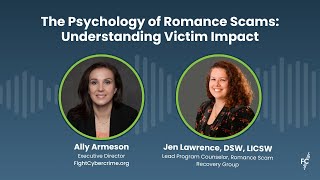
The Psychology of Romance Scams: Understanding Victim Impact
Detailed Analysis
Data is compiled from public records and verified media reports.
Last Updated: May 28, 2026
Summary
For 2026, The Psychology Of Romance Scams: Understanding Victim Impact remains one of the most searched-for profiles. Check back for the newest reports.
Disclaimer: